Sands Bank Local Nature Reserve (LNR) & Local Wildlife Site (LWS)
 Sands Bank Industrial Estate is the unlikely gateway to Sands Bank Local Nature Reserve (LNR), a beautiful site owned by the West Wycombe Estate. Chiltern Rangers help to manage the site in partnership with both the Estate and Butterfly Conservation Upper Thames Branch.
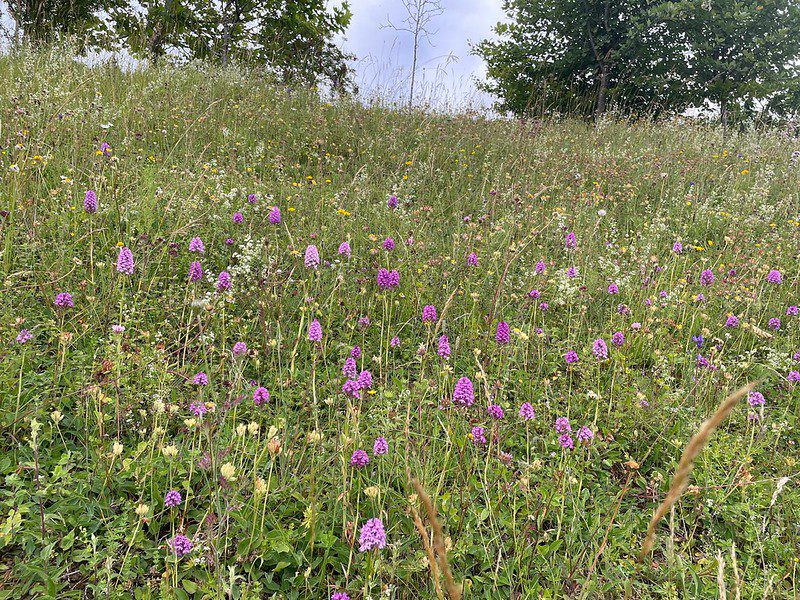
It is a 27 acre chalk grassland habitat mosaic – a mix of species rich grassland and scrub of various ages and species, designated Local Wildlife Site (LWS) due to its value for wildlife. Learn more about Local Wildlife Sites here.
This habitat combination provides both ‘bed & breakfast’ for a range of wildlife.
Dense thickets of hawthorn and blackthorn are perfect for nesting birds but are also crucial for pollinators in spring and then bursting with haws and sloes in autumn!
They also act as wind breaks creating sheltered micro habitats perfect for more fussy species particularly those smaller ones who need the sun to warm them up like reptiles and invertebrates. Other shrubs grow here too and provide food for caterpillars and other invertebrates.
Buckthorn leaves are feasted on by Brimstone caterpillars, Wych Elm growing in the margins is the foodplant for White-letter Hairstreak – look for them later in the summer around August.
An overview of 2025/26
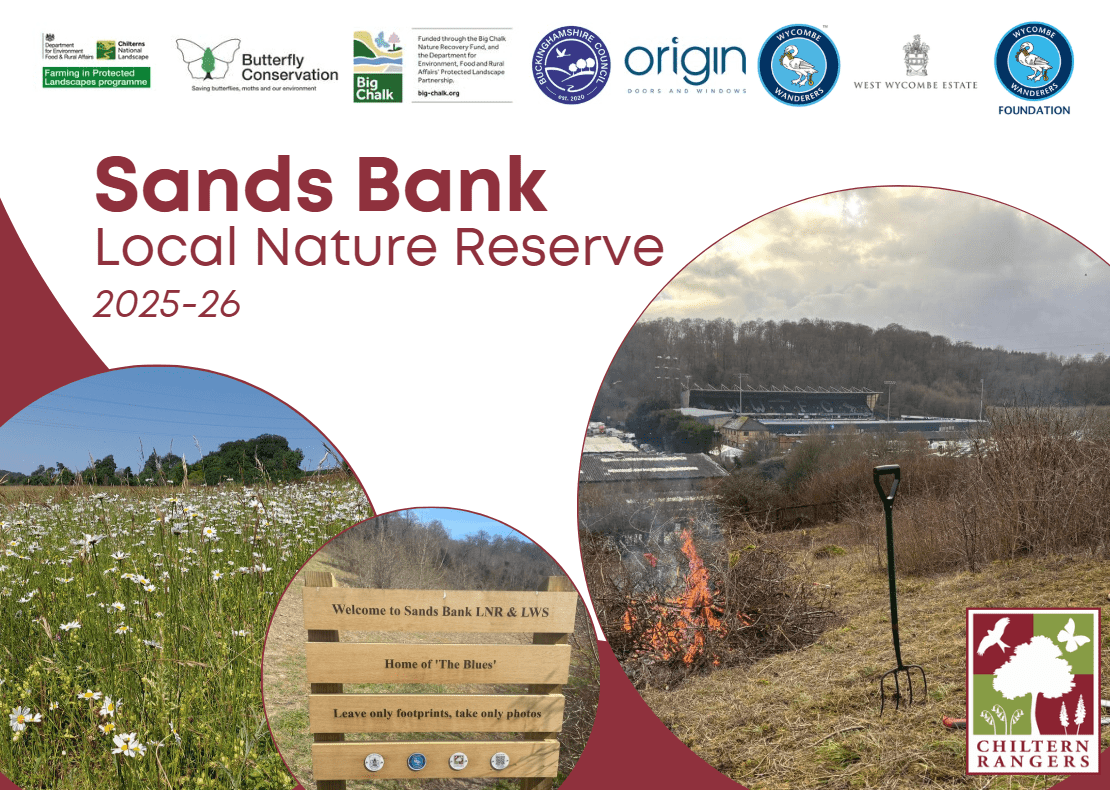
2025/26 was a busy year at Sands Bank, you can read all about what we have been up to in our report, just click on the image to the left.
Adams Park & WWFC
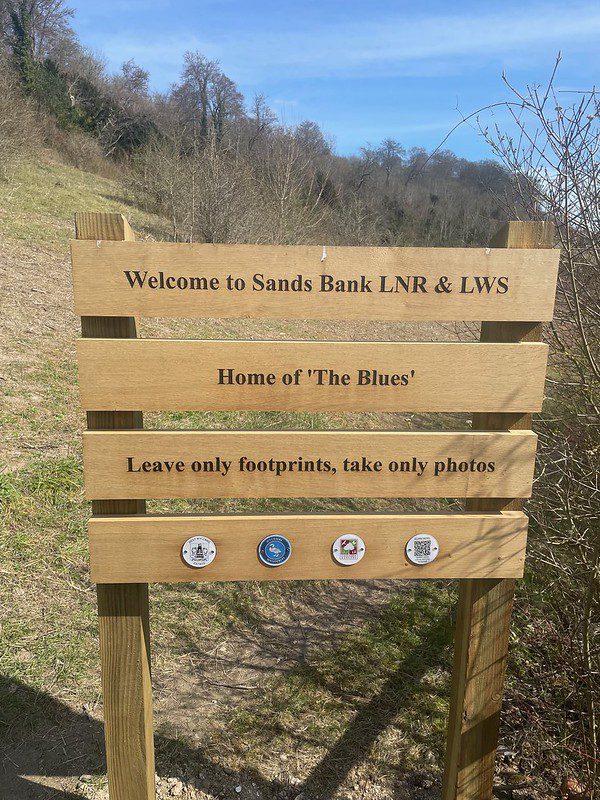
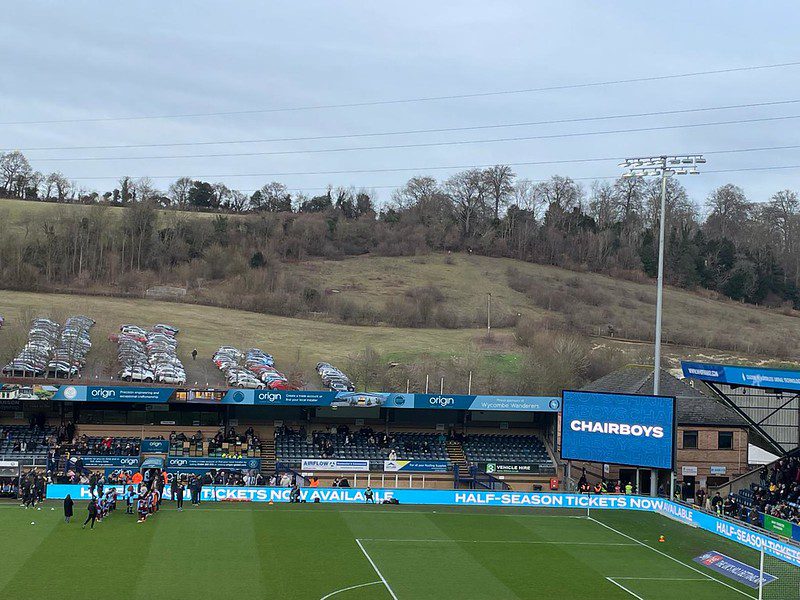
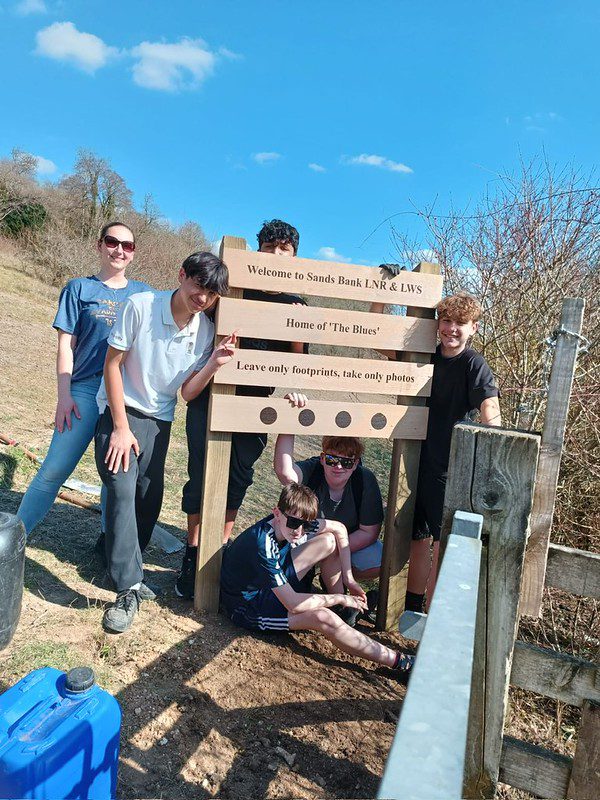
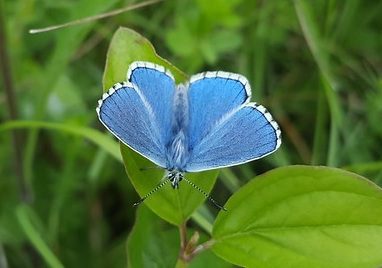
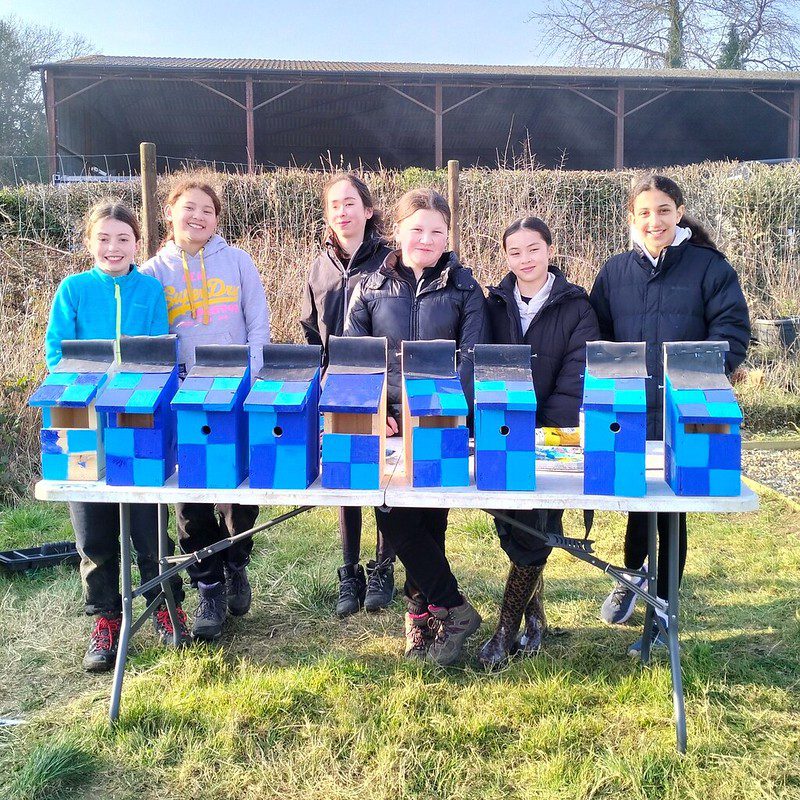
Sands Bank is situated opposite Adams Park, the home of Wycombe Wanderers FC. As the team play in light and dark blue quarters, it is the ‘Home of The Blues’ in more ways than one. As well as the home team at Adams Park, ‘the blues’ of Sands Bank are a special family of butterflies (Lycaenidae). Six can be found here through the spring & summer: Small Blue, Chalkhill Blue, Adonis Blue, Holly Blue, Common Blue and Brown Argus.

Scrub-bashing
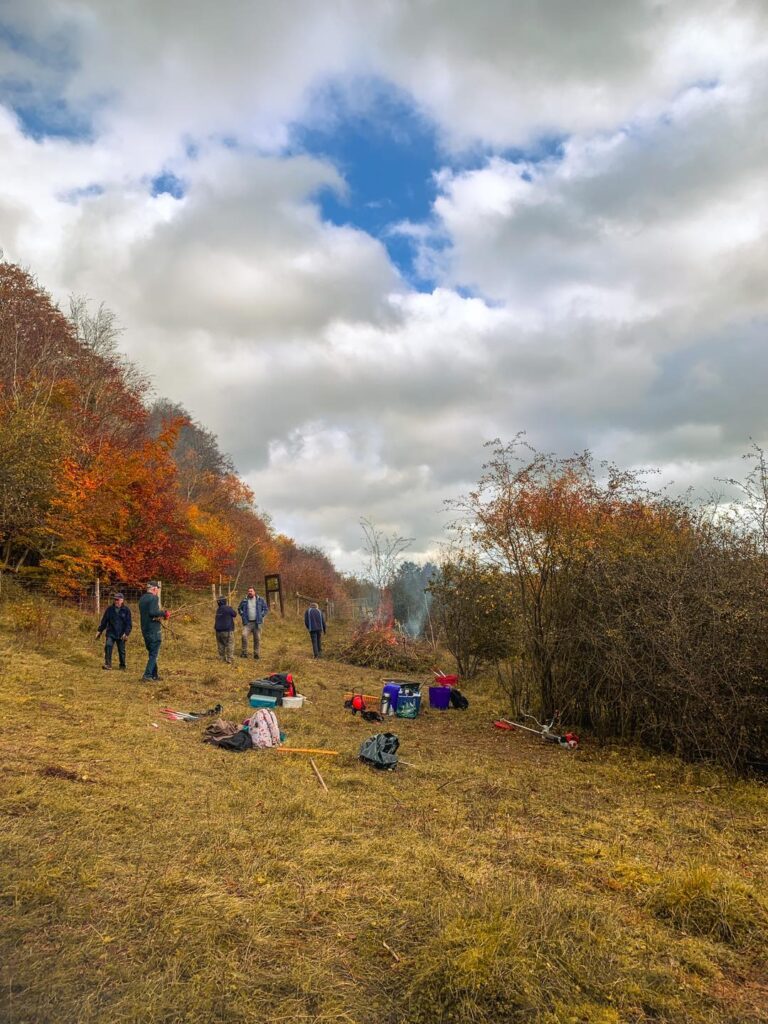
During the winter months you will more than likely find us scrub-bashing at Sands Bank.
Many people ask us why we are doing this as a scrub-bash can often look destructive. It is an essential conservation task, giving the chalk grassland much needed breathing space so wildflowers can grow providing a welcoming habitat to different species.
The larger trees we cut down are normally turned into log piles. These are perfect sanctuary for small mammals like hedgehogs & voles, reptiles including slow worms & common lizard and invertebrates such as beetles.
Click and scroll through the Sands Bank image gallery


Walking at Sands Bank
 It’s a beautiful spot to go for a walk. In a matter of minutes you can be looking out over High Wycombe and the Chilterns so download our leaflet and map and put your walking boots on!