Funges Meadow
Local Nature Reserve
Funges Meadow is a special place; a haven for plants and wildlife. The reserve is situated in the Marsh Green Conservation Area and is adjacent to the River Wye. It is a small urban nature reserve owned by Buckinghamshire Council, leased to and managed by Chiltern Rangers.
Chiltern Rangers manage the site for its biodiversity, utilising it for community engagement and educational activities such as Forest School. In order to preserve this tranquil area for wildlife, the site is not open to the public, but do keep an eye out for future volunteering sessions hosted at Funges Meadow.
The reserve has a wonderful mix of habitats for a smaller site close to Wycombe’s town centre, including a groundwater pond and a wildflower meadow. It also has vital areas of open-structured thorn, scrub, and bramble which provide perfect cover and nesting habitats for wildlife.
The Meadow
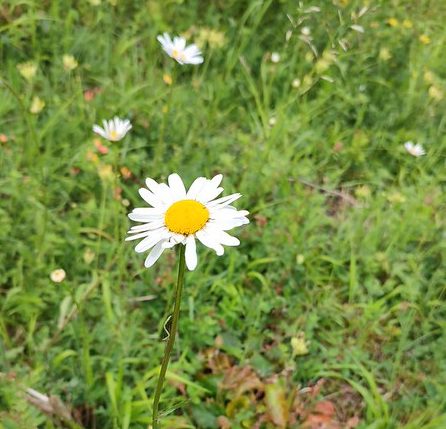
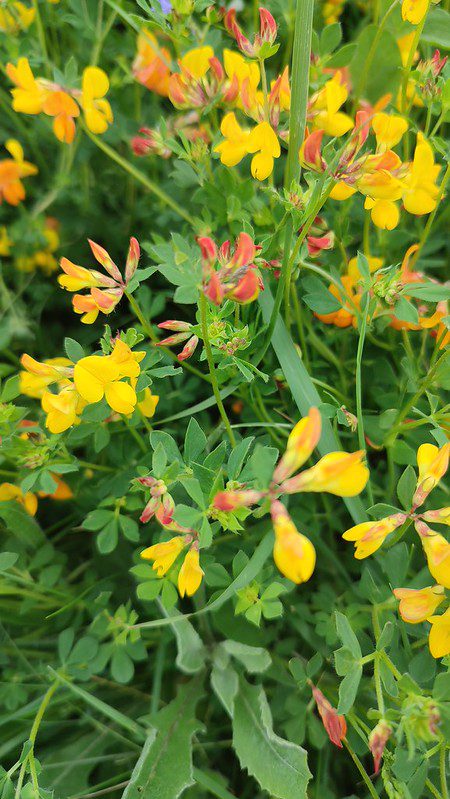
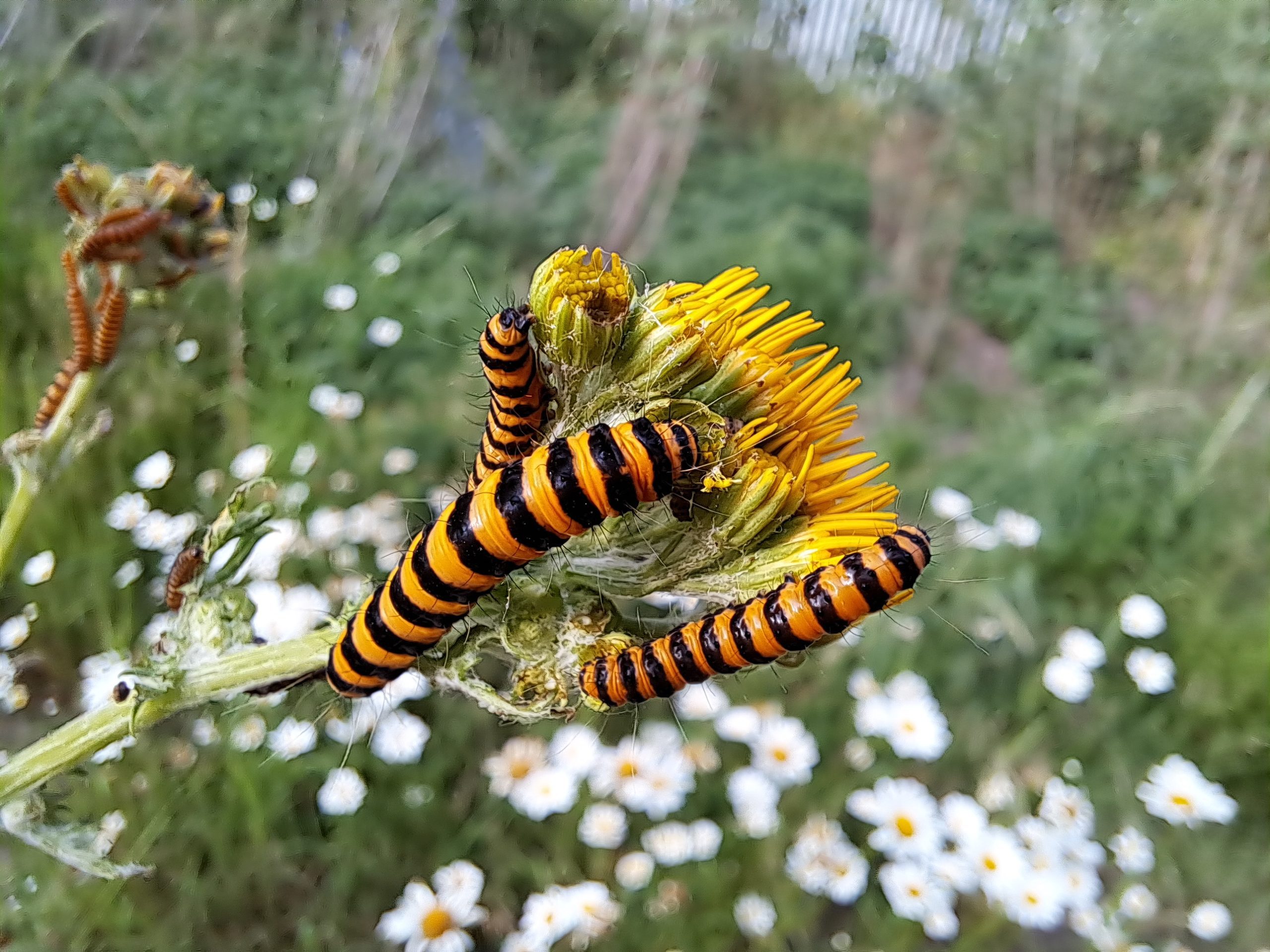
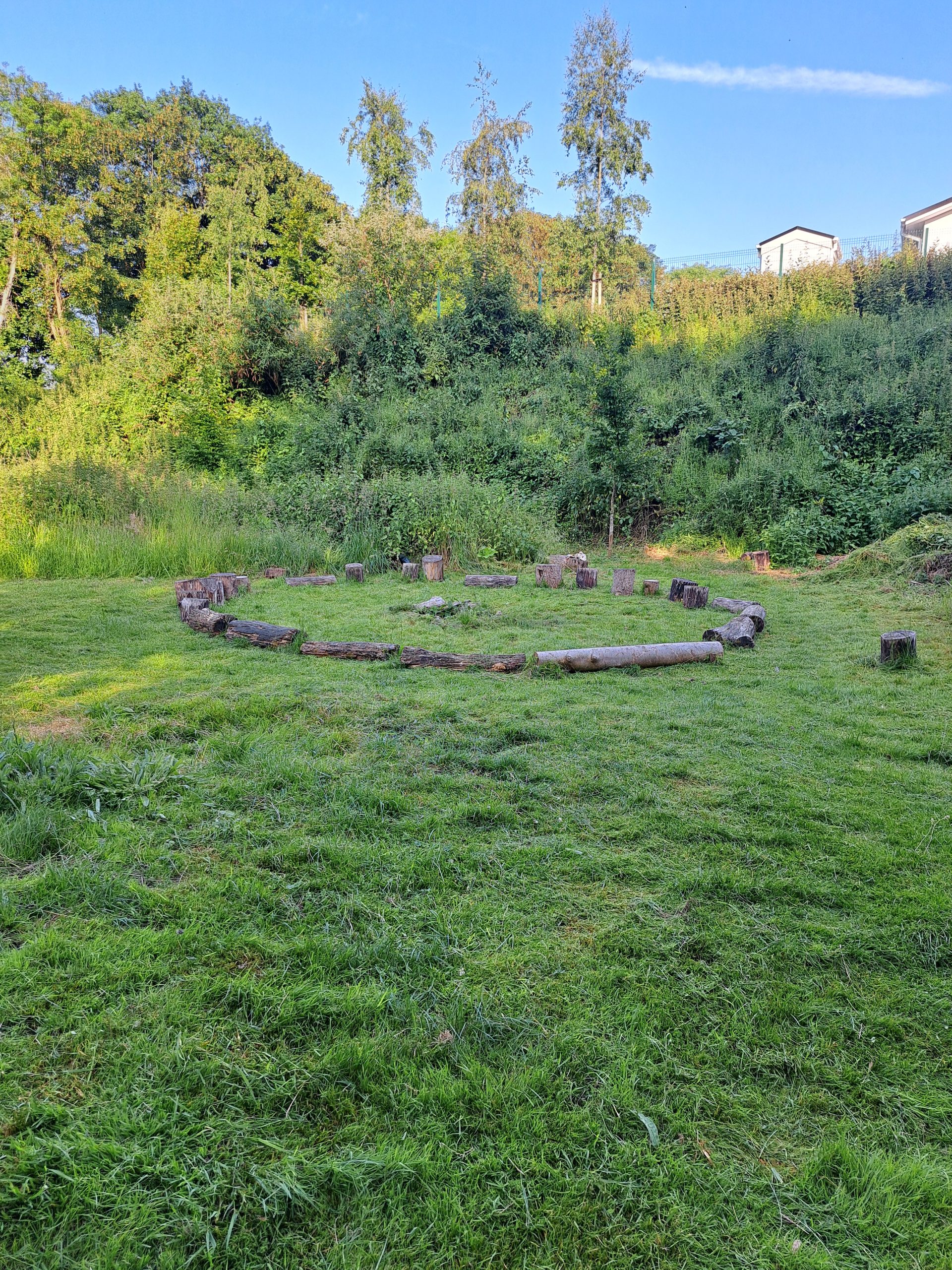
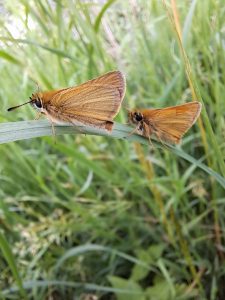 There are large numbers of Oxeye Daisies, our largest native daisy. The meadow is also known for low-growing Bird’s-foot Trefoil, showering the floor with beautiful yolk-yellow flowers. The meadow and its wildflowers are vital to many butterfly and moth species, including Small Skippers (pictured left) and Cinnabar Moths (caterpillars pictured below). One part of the meadow is reserved for the Forest School circle, used by local school and community groups.
We mow the meadow annually for the benefit of wildflowers. The flora in the meadow have a range of flowering times which provides energy-rich food for pollinators throughout the year.
Did you know that some bees will nest underground? Funges is home to several species of mining bee that are ground-nesting, including the Lobe-spurred Furrow Bee and the Orange-footed Furrow Bee.
The Pond
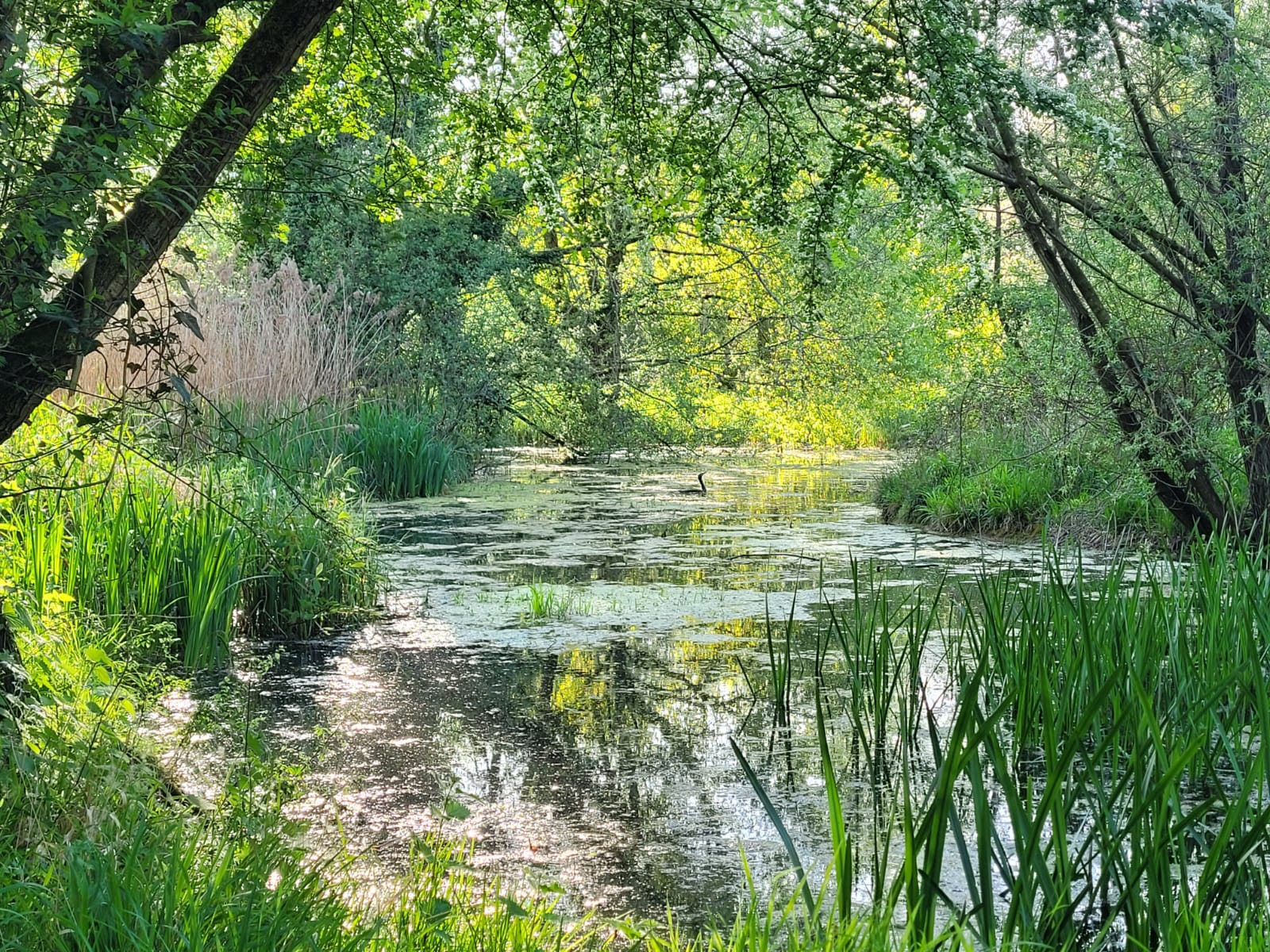
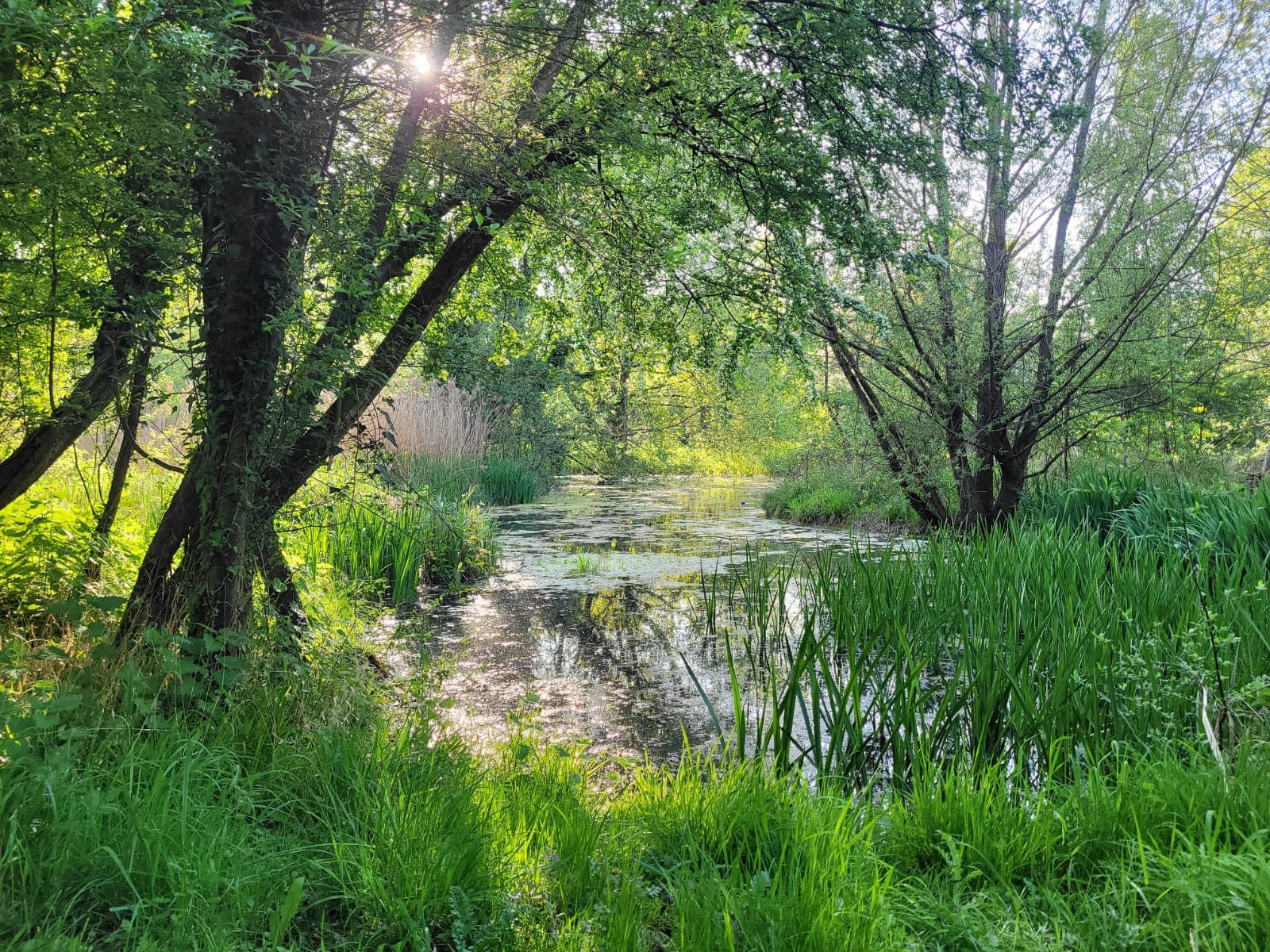
The groundwater-fed pond was created in 1997, and later remodelled to create wetland features that enhance marginal vegetation. These are plants that thrive in shallow water and wet soil on the edges of ponds, often creating transition zones between land and water.
There is a rich variety of pond flora such as Yellow Flag Iris, Water Forget-me-not, and Water Mint. On the wet soil edge you might find Purple Loosestrife, Marsh Wound-wort, Sneezewort, and Scrambling Woody Nightshade.
The pond provides habitat for numerous larval stages of insects including Mayflies, Damselflies and Dragonflies. Amongst the plethora of other freshwater invertebrates in recent years, both the Water Stick Insect and Water Scorpion have turned up on some pond-dipping sessions.
Wading Herons make use of the tranquillity of the site to stalk their prey of fish and amphibians in the shallows. The blue and orange dart of the Kingfisher in flight might also catch your eye if you’re lucky.


Other Wildlife
The great diversity of habitats in Funges Meadow allows a fascinating variety of wildlife to thrive. Fox can often be seen trotting past and Badgers disturb the grass areas looking for an evening snack. Muntjac Deer use the pond as a favourite watering hole as well as grazing in the meadow. Slow worms can also be found in the grassland areas.
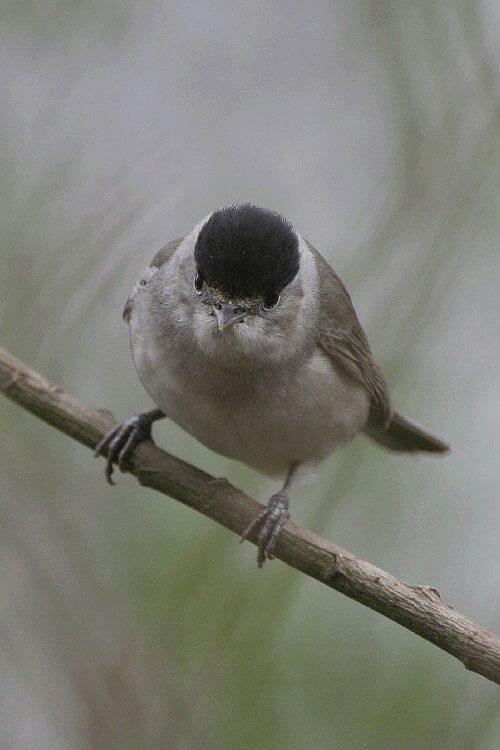
Many different species of bird can be seen (or heard) in Funges Meadow. Around the pond, in addition to the Heron and Kingfisher you might spot Little Egret, Cormorant, Coot, Moorhen and Mallard. In the meadow there are a variety of Warblers such as Blackcap, Chiffchaff, and occasionally Reed Warbler and Willow Warbler. Look out for Song Thrush, Blackbird, Blue Tit, Great Tit, Long-tailed Tit, and Robin as well.



Environmental Challenges
In the past, the site has faced environmental degradation, largely due to the introduction of fish and illegal fishing. This practise led to an influx of nutrients produced in the pond. The excessive nutrients accumulate through fish defecation and from fisherman’s bait. These cause algal blooms that limit the light penetrating the water and, of course, the overstocked fish eat anything else that tries to live in the pond. However, thanks to volunteers and partner projects with Revive the Wye, the pond now has a more balanced fauna count, which allows native aquatic plants to photosynthesise.
Revive the Wye were also involved with ‘balsam bashing’ invasive non-native Himalayan Balsam. Although the plant was not adjacent to the river, it was close enough to become a problem in the future.
Other invasive non-native species we watch out for include American Signal Crayfish. These were introduced to the UK from North America in the 1960’s, escaping from farms and now occupying a significant portion of our rivers in England and Wales. The species threaten our native White-clawed Crayfish and other freshwater species, outcompeting them for food and habitat. They also contribute to the erosion of our riverbanks through burrowing.
Over the years we have worked with many different partners to improve the site and habitat including: Revive the Wye , The Chiltern Society , The Environment Agency (EA) , Chiltern Chalk streams project , Foundation for Water Research , Wycombe Wildlife Group , Buckinghamshire Council (Previously Wycombe District Council)
Thank you to everyone who supports us to look after this beautiful site for nature!
Have a look at the following pages for further information:
Funges Improvement project 2015-18
Download the interpretation board by clicking on Funges Meadow interpretation board
To see the leaflet click on the following: